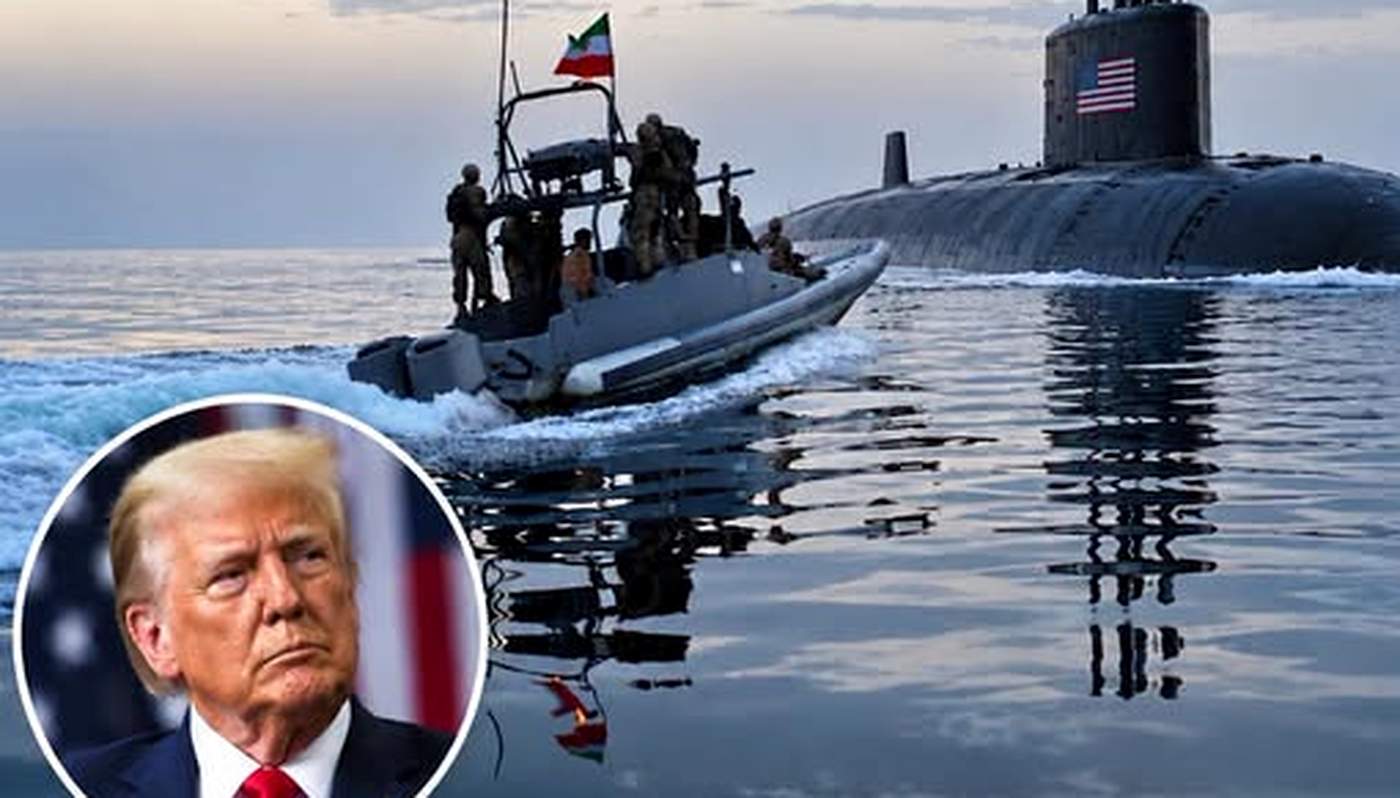
BREAKING — Iran has claimed that its Islamic Revolutionary Guard Corps (IRGC) Navy intercepted and seized a U.S.
BREAKING — Iran has claimed that its Islamic Revolutionary Guard Corps (IRGC) Navy intercepted and seized a U.S. unmanned underwater vessel near the entrance of the strategically important Strait of Hormuz, triggering a fresh exchange of competing accounts between Tehran and Washington.
Iranian officials portrayed the incident as a significant intelligence and military achievement,
saying the underwater vessel was captured during an operation near the Strait of Hormuz. The IRGC reportedly described the vessel as an advanced U.S. unmanned naval submarine and said it had been delivered to the American military in 2025.
Iranian officials further claimed that the vessel is now under Iranian control and suggested it could be retained as a symbol of what Tehran described as the consequences of U.S. actions against Iran.
The Strait of Hormuz is one of the world’s most strategically important maritime passages, making any confrontation involving military vessels or unmanned systems in the area potentially significant. The waterway connects the Persian Gulf with the Gulf of Oman and is a major route for global energy shipments.
But the Iranian account has been met with a sharply different explanation from the United States.
According to the account attributed to U.S. Central Command, the underwater drone had experienced a malfunction more than a day before Iranian forces reportedly took possession of it. U.S. officials also characterized the vessel as an older model rather than the highly advanced platform described by Iranian authorities.
The U.S. account further indicated that the unmanned vessel did not contain sensitive information or classified radar equipment, potentially reducing the intelligence value of the equipment even if Iran did obtain physical possession of it.
The conflicting descriptions highlight a broader information battle surrounding military operations in the region. While Tehran has presented the incident as evidence of its ability to challenge U.S. military technology, American officials have sought to portray the event as the recovery of a malfunctioning, less-sensitive unmanned system rather than the capture of a critical military asset.
For Iranian authorities, however, the incident provides an opportunity to demonstrate military capability at a time of heightened tensions. State-linked messaging has emphasized the alleged seizure, portraying it as evidence that Iranian forces remain capable of monitoring and intercepting foreign military activity around the country’s waters.
The incident also raises questions about the circumstances surrounding the vessel’s loss of control. Unmanned underwater systems can be deployed for surveillance, reconnaissance and other missions, but technical failures can leave such platforms vulnerable to recovery or interception.
At this stage, the competing accounts have not established all the circumstances
surrounding the incident, including the precise location of the vessel, the nature of its mission and how Iranian forces allegedly obtained it.
The episode comes amid continuing tensions between Iran and the United States, where military movements and statements from both sides are closely watched for signs of escalation.
For Tehran, the alleged seizure is being presented as a notable success. Iranian leaders and state media have highlighted the event as a demonstration of national strength and technological capability.
Critics, however, argue that the celebration surrounding the underwater vessel should be viewed in the broader context of the conflict, where both sides have offered competing accounts of military losses and battlefield developments.
Iran has also faced pressure to provide greater transparency regarding its own losses during the conflict. That has fueled criticism from opponents who argue that Tehran has been much more willing to publicize an alleged American setback than to provide detailed information about Iranian casualties and equipment losses.
The contrasting narratives underscore the difficulty of independently assessing battlefield claims during an active conflict.What is clear is that the alleged seizure has become more than a dispute over a single unmanned vessel. For Iran, it represents a potential propaganda victory and an opportunity to demonstrate control near one of the world’s most strategically sensitive waterways. For the United States, the incident is being characterized as the loss of an older unmanned system following a malfunction, rather than the capture of a critical piece of military technology.
As tensions continue, officials and observers will be watching closely for additional evidence about what happened to the vessel, why it malfunctioned and what information—if any—it contained.For now, the two sides remain divided over the significance of the incident, with Iran celebrating what it describes as a successful interception and the United States emphasizing that the system was already compromised before it came under Iranian control.