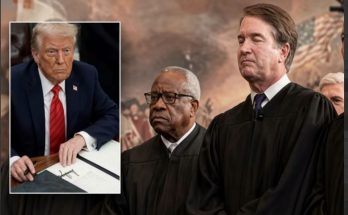
The U.S. Supreme Court ruled Thursday that the Trump administration can proceed with ending Temporary Protected Status for roughly 356,000 Haitian and Syrian immigrants currently living and working in the United States.
The 6-3 decision grants the Department of Homeland Security authority to terminate TPS designations without court intervention. Haiti has held TPS status since 2010 following a devastating earthquake, while Syria received the designation in 2012 due to its ongoing civil war.
What Happened
The Supreme Court’s conservative majority determined that immigration authorities, not federal courts, hold sole power to decide whether TPS protections should continue. The ruling clears the way for the Trump administration to move forward with its broader effort to end TPS for approximately 1.3 million immigrants from 17 countries.
The administration has already initiated termination proceedings for roughly one million people from 13 countries, including approximately 650,000 Venezuelans and 50,000 Hondurans. Decisions remain pending for about 200,000 Salvadorans and 100,000 Ukrainians whose protections expire in coming months.
Political and Legal Response
New York City Mayor Zohran Mamdani issued a sharp statement condemning the ruling. “The Supreme Court just sparked one of the largest attacks on immigrants in modern American history,” Mamdani said, pledging that the city would continue supporting affected immigrants through its legal resources and the Mayor’s Office of Immigrant Affairs.

Ahilan Arulanantham, co-director of UCLA’s Center for Immigration Law and Policy, warned of broader implications. “The implication of this is that at least most of the claims that have been litigated to challenge this administration’s sort of illegal war on TPS are now foreclosed,” he said.
Timeline and Next Steps
The ruling will not take effect immediately. Supreme Court decisions typically become effective 32 days after issuance, and the case must return to lower courts for implementation, meaning Haitian and Syrian TPS holders are expected to retain work authorization until at least late July.
Attorneys representing TPS recipients maintain that both countries remain unsafe due to ongoing instability and argue the administration failed to properly evaluate conditions before ending protections. Advocates are encouraging affected individuals to explore alternative legal pathways, including asylum or employment-based visas, though immigration lawyers acknowledge these options have become increasingly difficult to obtain.
This story has been updated. CNN’s staff contributed to this report.