Rubio Signals Support for Vance as Republicans Look Ahead to 2028
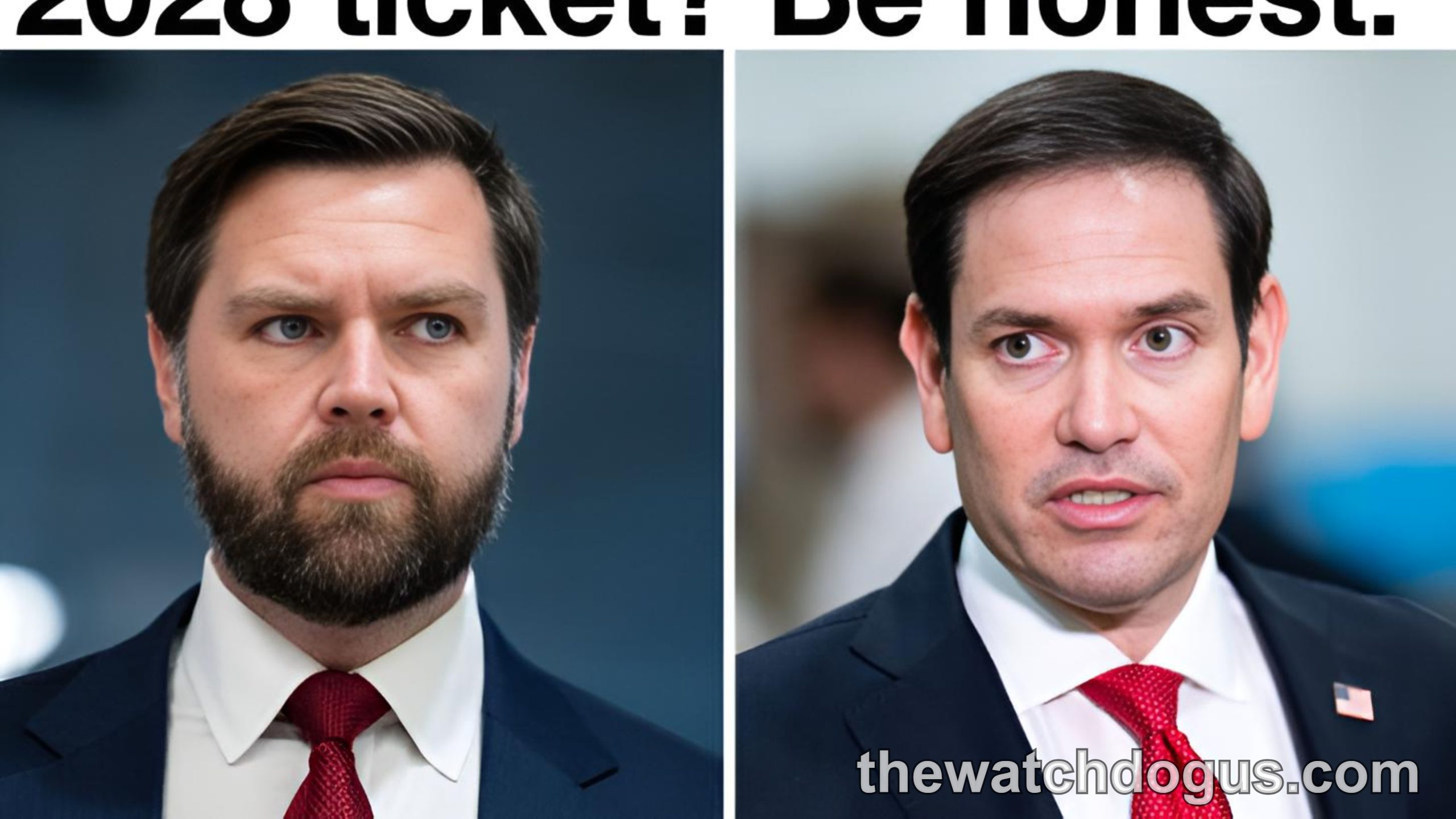
As the 2028 presidential election remains years away, early conversations about the future of the Republican Party are already taking shape. One development drawing attention is Senator Marco Rubio’s indication that he would support Vice President JD Vance should Vance decide to pursue the presidency after the Trump era.
Rubio’s comments have fueled discussion among Republican voters, political strategists, and conservative activists about what the party’s next chapter could look like. While no official 2028 campaign has been announced, the possibility of a Vance-led ticket is emerging as a topic of debate within Republican circles.
Vance, who rose to national prominence through his bestselling memoir Hillbilly Elegy and later entered politics, has become one of the most visible voices in the party’s populist wing. Since joining the national ticket and assuming a prominent role in Republican politics, he has frequently emphasized issues such as domestic manufacturing, economic nationalism, immigration enforcement, and skepticism toward global economic arrangements that he argues have harmed American workers.
Supporters view Vance as a representative of a newer generation of Republican leadership. They argue that his political message resonates with working-class voters, particularly in industrial and rural regions of the country. His backers often point to his willingness to challenge both Democratic policies and traditional Republican orthodoxy on issues such as trade and foreign policy.
Rubio, meanwhile, remains one of the Republican Party’s most experienced and recognizable figures. First elected to the Senate from Florida in 2010, he initially gained prominence as part of the Tea Party movement before evolving into a leading voice on foreign policy, national security, and relations with major global powers such as China. Over the years, Rubio has maintained significant influence within the party despite shifts in the broader political landscape.
Political observers note that a partnership between Vance and Rubio would combine two different but increasingly aligned strands of modern Republican politics. Vance is often associated with the party’s populist and working-class appeal, while Rubio brings experience in governance, legislative affairs, and international issues. Together, they could potentially appeal to a broad range of Republican voters.
Many conservatives see continuity between the policy priorities promoted by former President Donald Trump and those championed by Vance and Rubio. Immigration enforcement remains one of the central issues. Republican leaders aligned with the America First movement have consistently advocated stronger border security measures and stricter immigration policies, arguing that such steps are necessary to protect national sovereignty and economic opportunities for American citizens.
Economic policy is another area where supporters see overlap. Advocates of the America First agenda often call for policies designed to encourage domestic manufacturing, reduce dependence on foreign supply chains, and strengthen American competitiveness. Vance has frequently argued that globalization has benefited economic elites while leaving many communities behind, a message that has found support among portions of the Republican base.
Foreign policy also remains a key point of discussion. Rubio has long emphasized the importance of projecting American strength abroad and confronting strategic rivals. Vance has generally favored a more restrained approach to international engagement, focusing on what he describes as core American interests. While analysts note differences in emphasis between the two politicians, supporters argue that both ultimately prioritize American national interests.
Democrats and Republicans offer sharply different interpretations of these policy goals. Supporters of the America First movement contend that stronger border enforcement, economic nationalism, and cultural conservatism are essential for the country’s future. Critics, however, argue that some of these policies could have significant economic, social, and diplomatic consequences. They also contend that political rhetoric surrounding immigration and cultural issues can deepen national divisions.
The prospect of a Vance-led Republican ticket has already sparked discussion about the future direction of the party. Since Trump’s rise in 2016, the Republican Party has undergone a significant transformation. Traditional debates over free trade, foreign intervention, and the role of government have increasingly given way to arguments centered on populism, economic nationalism, and cultural issues.
Many Republican voters view this shift as a necessary response to changing political and economic realities. They argue that the party’s growing support among working-class voters demonstrates the effectiveness of the new approach. Others within the party continue to debate how best to balance populist priorities with longstanding conservative principles.
Political strategists caution that it remains far too early to predict the shape of the 2028 race. Numerous factors—including the outcome of future elections, economic conditions, international developments, and voter sentiment—will influence the political landscape. Additional Republican figures could also emerge as potential presidential contenders, creating a competitive primary environment.
Nevertheless, Rubio’s endorsement comments have highlighted the growing visibility of Vance as a potential standard-bearer for the party’s future. For supporters, the possibility of a Vance-Rubio partnership represents a continuation of the political movement that has dominated Republican politics for much of the past decade. For critics, it raises questions about whether the party will continue moving in a populist direction or eventually seek a different path.
As Washington looks beyond the current political cycle, discussions about leadership succession and party identity are likely to intensify. While the 2028 election remains distant, the conversation surrounding figures such as JD Vance and Marco Rubio underscores a broader reality: both major parties are already beginning to think about the next generation of national leadership.
Whether Vance ultimately seeks the presidency, whether Rubio plays a role in a future campaign, and how Republican voters respond remain open questions. What is clear is that the debate over the future of the Republican Party—and the legacy of the America First movement—has already begun.