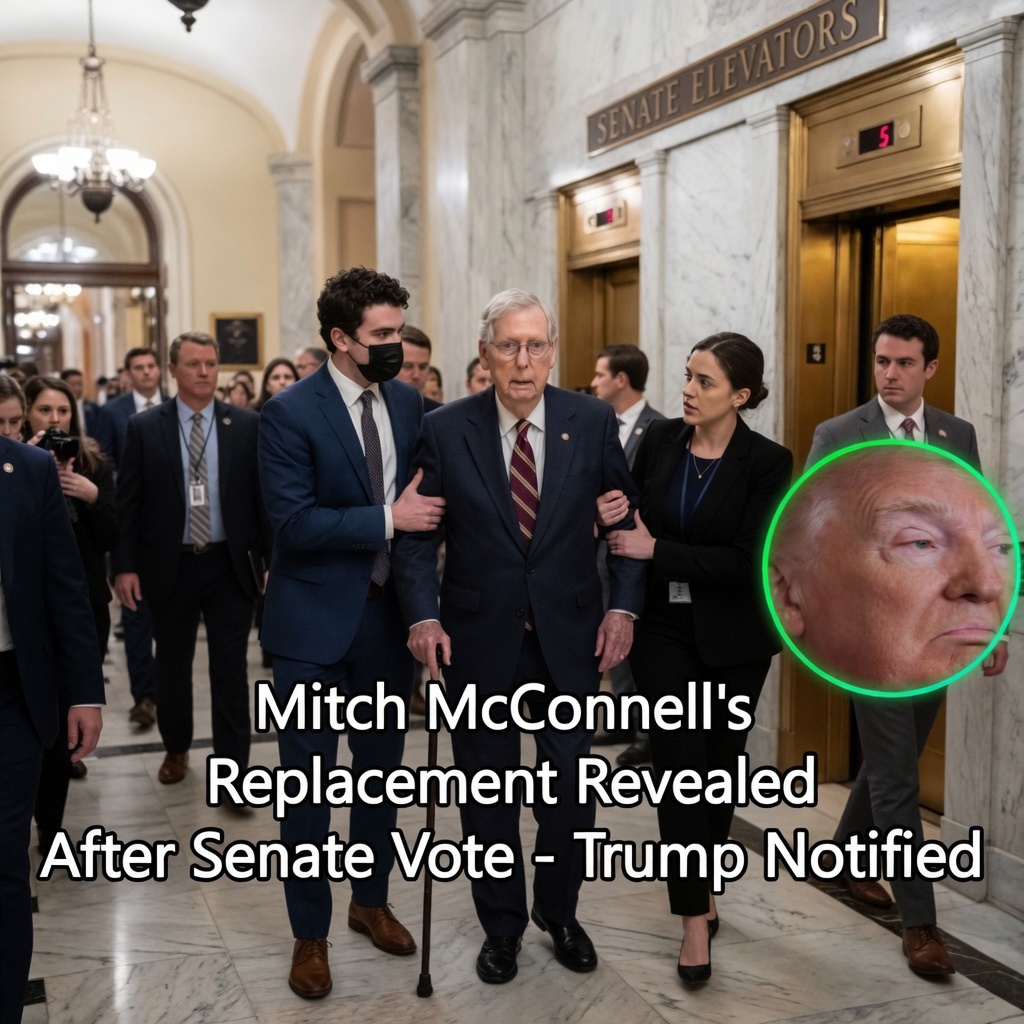
WASHINGTON, D.C. — The top three Republican candidates vying to replace longtime U.S. Sen. Mitch McConnell took the stage Monday night at the Henry Clay event center in downtown Louisville for the first Republican primary debate. McConnell, a Republican who has represented Kentucky in the Senate since 1985, announced earlier this year that he would not seek reelection in 2026 after more than 40 years in office, creating the first open Senate seat in the state in years.
Rep. Andy Barr, former Kentucky Attorney General Daniel Cameron, and businessman Nate Morris are competing in the Republican primary, which is among this year’s most competitive races. All three candidates expressed strong support for President Donald Trump, hoping to secure his endorsement in a state that Trump carried overwhelmingly in the past three presidential elections.
The debate provided voters an opportunity to hear the candidates discuss their positions on key issues and outline their priorities as the Republican primary campaign intensifies. At one point, the candidates were asked about Trump’s military actions against Iran and at what point Congress should become involved.
Barr, who voted against a recent War Powers Act resolution seeking to limit the president, stated that the president has the legal authority as commander in chief to defend the country, while Congress has the power to declare war but not to prevent the president from advancing national security. He argued that the resolution would have sent a dangerous signal and been a gift to adversaries, adding that the objectives are being achieved.
Cameron took a similar stance, contrasting Trump’s decisive action with what he described as the red lines and disastrous evacuation from Afghanistan under previous administrations. He expressed gratitude for Trump’s leadership on Iran and referenced actions against Venezuelan President Nicolás Maduro, calling Trump on the right track for national security.
Morris said it was simple: he trusts President Trump because of the results he has delivered for the American people and stands by him 100 percent. He described Trump’s approach as surgical and tactical in dealing with foreign governments and emphasized the need for a senator willing to vote with the president and have his back on foreign policy.
The candidates were also asked about Trump’s aggressive enforcement of immigration laws. Cameron said people in neighborhoods want to sleep soundly in their homes and highlighted the importance of deporting violent criminals. He called for withholding federal funding from sanctuary states and cities.
Morris advocated for a full moratorium on new immigration until every illegal immigrant who entered under the previous administration is deported, stating that the country was invaded and all must go back, with no taxpayer money given to illegals.
Barr said he has tripled ICE funding and supported the toughest border security in history because the American people must be protected first.
The debate highlighted the candidates’ alignment with Trump on both foreign policy and immigration, key issues in a state where Trump has dominated recent presidential elections. McConnell’s retirement has opened the race, drawing significant interest as Republicans seek to maintain their hold on the seat. The primary is expected to be competitive, with the winner likely to face a Democrat in the general election in November.
Political observers note that the candidates’ unanimous support for Trump’s positions reflects the political reality in Kentucky, where Trump has carried the state by wide margins. The debate comes as the Republican primary campaign ramps up, with voters evaluating the contenders on their ability to carry forward conservative priorities.
The open seat has drawn national attention, as it represents one of the few truly competitive opportunities in the Senate map for 2026. All three candidates positioned themselves as strong conservatives who would back Trump’s agenda if elected. The debate was the first of what is expected to be several forums before the primary.
The results of the Kentucky primary could have implications for the balance of power in the Senate. Republicans currently hold the majority, and maintaining or expanding that edge remains a central goal heading into the midterms. The candidates’ emphasis on national security and border enforcement mirrors broader Republican messaging nationwide.
Further debates and campaign events are anticipated in the coming months as the primary season progresses. The winner of the Republican primary will be heavily favored in the general election given the state’s political leanings, making the primary the most critical contest for the seat.