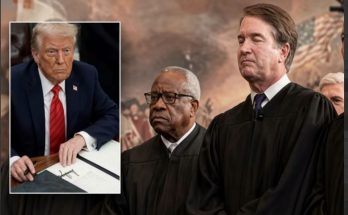
The U.S. Supreme Court struck down Louisiana’s congressional map on Wednesday and sharply limited the use of race in drawing district boundaries in a major ruling that could carry significant consequences for future House elections. In comparison to 2024 maps, the decision could increase the Republican dominance in the House by an extra 19 seats and alter voting throughout the South. Louisiana had been ordered by lower courts to create a second majority-Black congressional district in 2024 to comply with Section 2 of the 1965 Voting Rights Act, which bars states from diluting minority voting strength. The Trump administration and state officials challenged the revised map, arguing it amounted to an unconstitutional racial gerrymander in violation of the 14th Amendment, which guarantees equal protection under the law, reports said on Wednesday.
In a majority opinion, Justice Samuel Alito said that “because the Voting Rights Act did not require Louisiana to create an additional majority-minority district, no compelling interest justified the State’s use of race in creating SB8, and that map is an unconstitutional racial gerrymander.” About one-third of Louisiana’s residents are African-American, and the state’s only two Democratic lawmakers in Congress (compared to four House Republicans) were elected from majority-black districts. The ruling carries immense weight, with two prominent voting rights organizations noting earlier that the removal or restriction of Section 2 will likely empower Republican-led legislatures to change the boundaries of as many as 19 congressional districts to their advantage, in order to comply with the court. “However, it’s not clear if red states will be able to seize on the Supreme Court’s decision in time to significantly impact the 2026 midterms, in which Democrats are favored to retake the House of Representatives,” the New York Post reported.
This would enable mapmakers to emphasize Republican strengths. Chief Justice John Roberts, the author of the 2023 Allen v. Milligan ruling that requires the establishment of a second majority-Black district in Alabama, examined whether this framework is consistent with Allen and the Court’s Thornburg v. Gingles criteria. The test mandates that plaintiffs demonstrate a minority group is not only sizable and cohesive but also experiences majority bloc voting that undermines their electoral candidates. Roberts appeared focused on aligning the proposal with established norms, steering clear of a complete transformation.
Voting Rights Implications
Justice Brett Kavanaugh, an influential voice in the Allen case alongside Roberts and the liberal justices, raised the possibility of a “sunset” clause for Section 2 remedies, referencing precedents that restrict race-based policies to temporary solutions. Voting rights organizations aligned with the Democratic Party already warned that the removal or restriction of Section 2 could empower Republican-led legislatures to change the boundaries of as many as 19 congressional districts to their advantage. Fair Fight Action and the Black Voters Matter Fund argue that if Section 2 of the Voting Rights Act is invalidated, it could significantly increase the likelihood that Republicans will maintain control of the House of Representatives for years. Research has identified 27 congressional seats nationwide that Republicans could benefit from if the current legal and political landscape remains unchanged. Nineteen of these changes are directly tied to the potential loss of Section 2 protections.
The SCOTUS ruling will prompt many states to redraw maps ahead of November’s elections. “Extremely gratified to see this decision we’ve been waiting for! I was proud to co-author the brief for the United States as amicus in this important case, perhaps one of the most important developments in decades in Voting Rights Act jurisprudence!” wrote U.S. Assistant Attorney General for the Civil Rights Division Harmeet Dhillon on X, celebrating the Supreme Court gutting the VRA. “The Voting Rights Act of 1965 was enacted to ban racial discrimination in voting. Rather than enforce that discrimination ban, the Supreme Court greenlight the Left’s twisting of the VRA into a mandate to create every possible racially gerrymandered ‘majority-minority’ district,” wrote Missouri Republican Sen. Eric Schmitt. This article may contain commentary which reflects the author’s opinion.
Trump Jr. Wedding and Omar’s Criticism
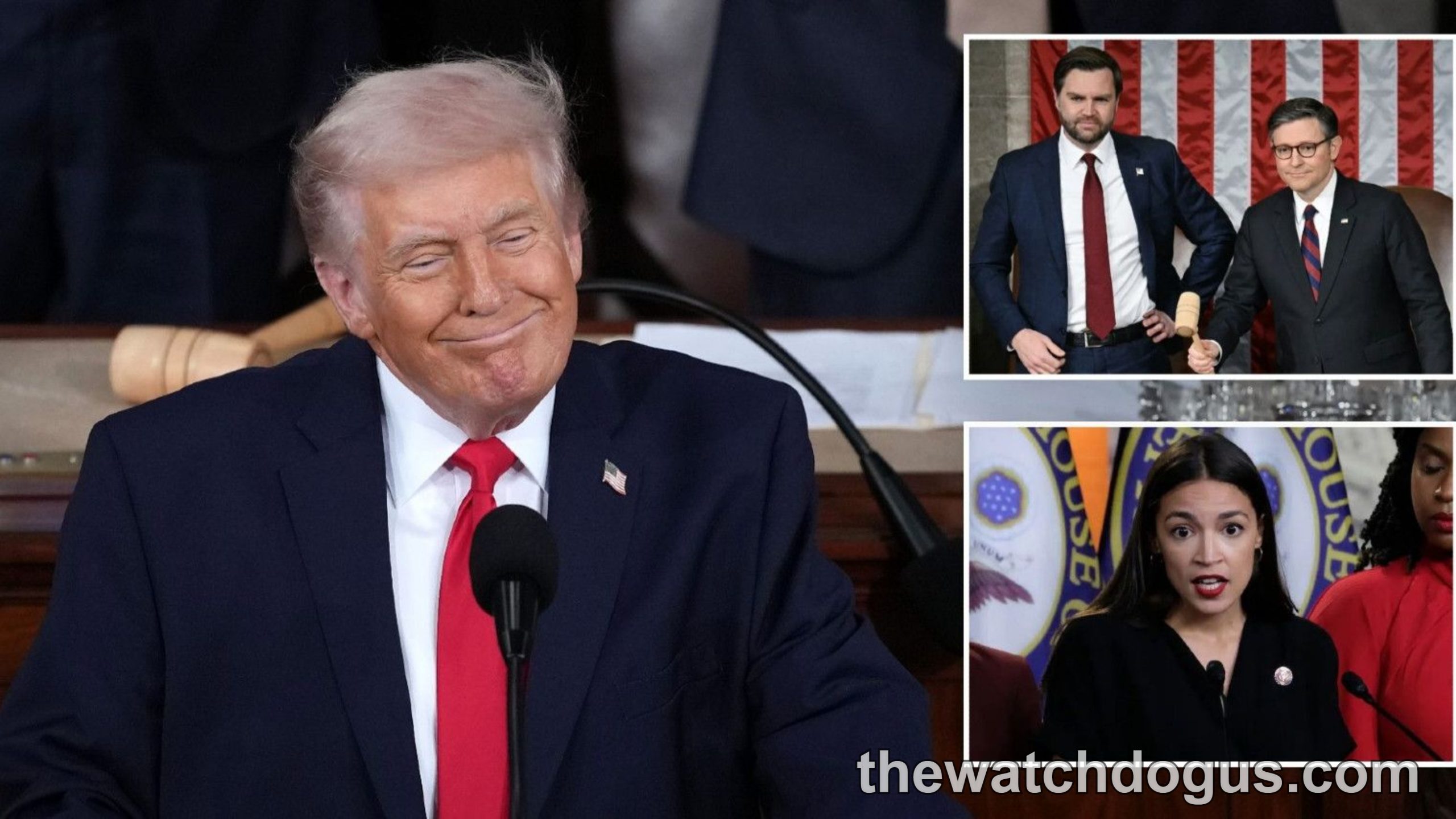
Rep. Ilhan Omar took aim at President Donald Trump over his decision not to attend Donald Trump Jr.’s wedding, suggesting the president’s absence reflected misplaced priorities even as the White House was consumed with high-stakes negotiations involving Iran. Donald Trump Jr. reportedly married Bettina Anderson in a private ceremony ahead of Memorial Day weekend in the Bahamas. The wedding was intentionally kept small and secluded, according to reports, with organizers hoping to avoid the logistical and security headaches that would come with a presidential appearance.
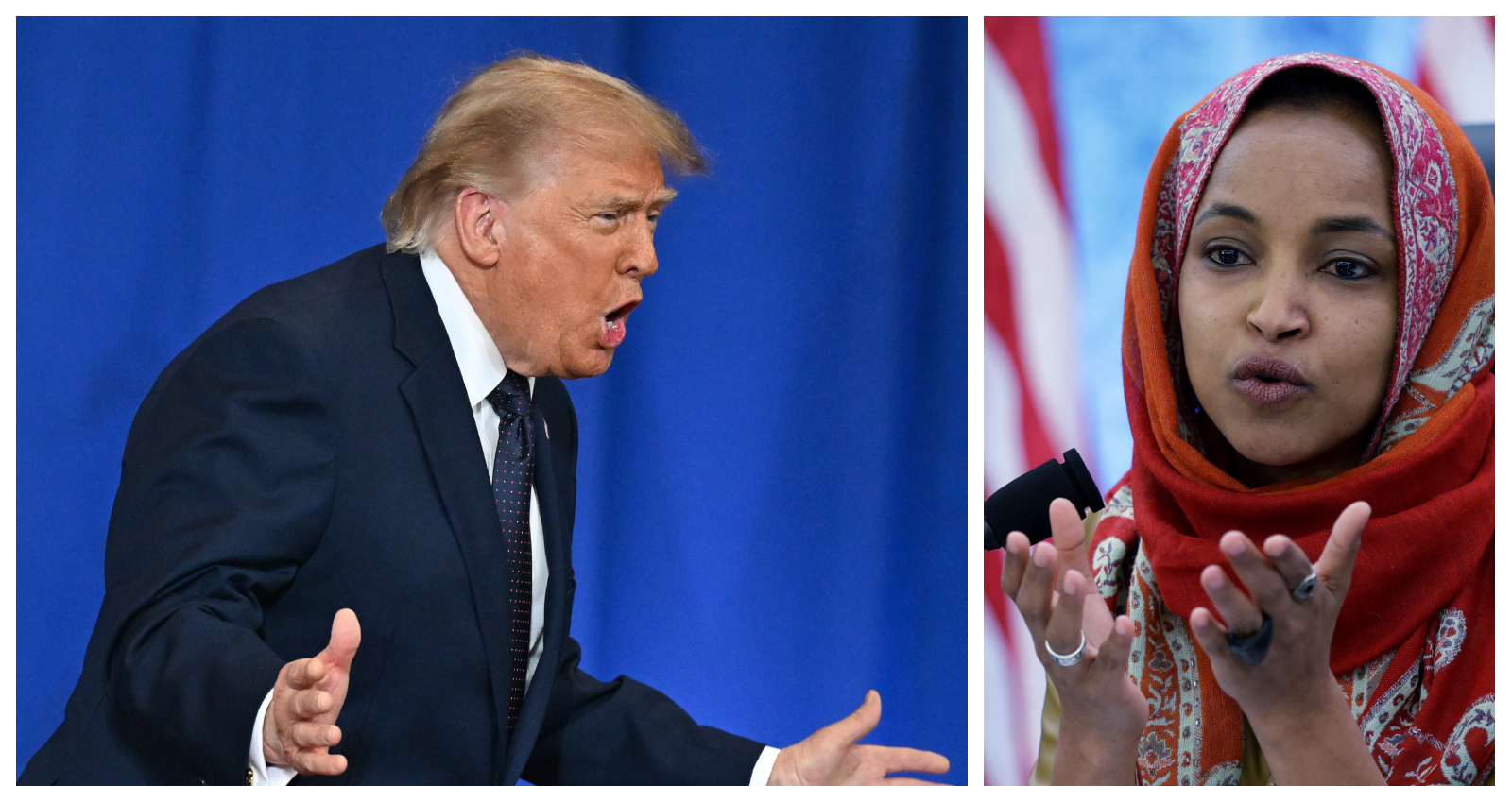
Before the wedding, Trump addressed the situation while speaking with reporters in the Oval Office. “He’d like me to go, but it’s going to be just a small little private affair, and I’m going to try and make it,” Trump said. “I’m in the midst – I said, you know, this is not good timing for me,” he added. “I have a thing called ‘Iran’ and other things. That’s one I can’t win on.” Trump also joked that the media would attack him regardless of what he decided. “If I do attend, I get killed. If I don’t attend, I get killed – by the fake news of course, I’m talking about,” Trump said. “He’s got a very good person I’ve known for a long time, and hopefully they’re going to have a great marriage,” the president continued.
Ultimately, Trump did not attend as tensions involving Iran escalated and diplomatic efforts intensified. TMZ later caught up with Omar and asked for her thoughts on Trump missing the event. “I mean, I would think any parent would want to be there for their child’s important day, and getting married is a pretty important day,” Omar said. When the reporter asked whether a major international crisis might justify the absence, Omar pressed harder. “He finds time to golf when there are important things that are happening, or walk around talking about the ballroom,” she said. “So he certainly – if he really cared about his son and cared about being a family man, he would try to make time to go to his son’s wedding,” she added.
Political Fallout and Context
The comments quickly fueled reaction online, with Trump supporters arguing that a commander-in-chief prioritizing global security over a private family event reflects leadership, not neglect. Critics of the president, however, echoed Omar’s broader point that family milestones should take priority when possible. Earlier this year, Trump blasted Omar during remarks in Florida for always complaining about the country that took her in. “They come here, and Ilhan Omar… ever hear of her? She heads it,” Trump said while criticizing Somalia. “Think of it, they have nothing but crime, poverty, pollution, everything is horrible over there, nothing good,” Trump went on. “They say it’s the worst country anywhere in the world.”
“We got some beauties out there, but it’s the worst. Then she comes here, from Somalia, and she tells us how to run the United States of America,” he said. Trump Jr. was previously engaged to Kimberly Guilfoyle, who now serves as U.S. ambassador to Greece. The timing of the wedding coincided with one of the administration’s most sensitive foreign policy moments. Trump and senior officials have been engaged in tense negotiations involving Iran, with the White House balancing diplomacy and military pressure. That backdrop made any presidential travel especially complicated.
Still, Omar clearly was not impressed, Breitbart News reported. Her criticism reflects the broader political reality that even intensely personal decisions by public figures can quickly become political ammunition. For Trump, it was the exact kind of scenario he described beforehand. No matter what he chose, someone would attack the decision.