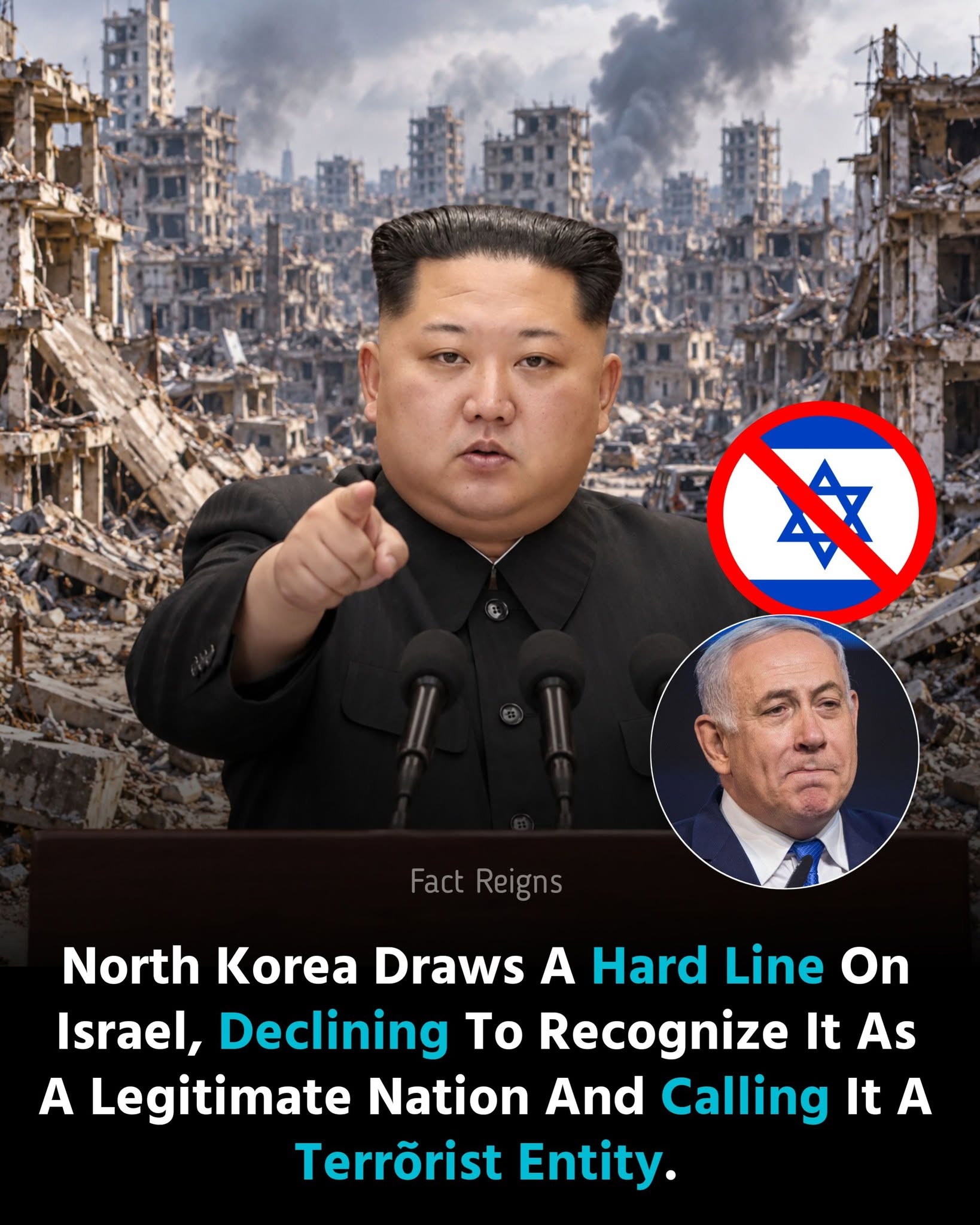
North Korea Hardens Stance Against Israel….
North Korea maintains a long-standing refusal to recognize Israel as a sovereign state, framing it instead as a U.S.-backed project and an extension of American influence in the Middle East. Leader Kim Jong Un has characterized Israel in these terms, aligning with Pyongyang’s official view that the country functions as an instrument of external power rather than an independent nation.
This position dates back decades and forms part of North Korea’s broader anti-imperialist foreign policy. State authorities have consistently described Israel as an imperialist satellite aligned with the United States and its partners. In place of recognition for Israel, Pyongyang acknowledges Palestine as the sole legitimate authority over the historic territories in question. Official statements have repeatedly condemned Israeli military and political actions while expressing support for Palestinian causes and groups.
The stance fits a wider pattern of sharp criticism directed at the United States and its allies. North Korea has no diplomatic relations with Israel, and contacts between the two remain nonexistent. State media outlets regularly present the Israeli-Palestinian conflict in strongly critical language, emphasizing themes of occupation, external backing, and resistance. These reports typically echo official rhetoric that links the situation to larger geopolitical rivalries involving Washington.
Pyongyang’s approach has shown little public shift over time, even as regional dynamics in the Middle East have changed. Analysts note that the policy serves both ideological consistency and practical alignment with partners who share opposition to U.S. positions. While North Korea’s capacity for direct involvement remains limited by distance and resources, its statements continue to reinforce a clear dividing line: non-recognition of Israel paired with rhetorical backing for Palestinian claims.
No formal channels exist for dialogue, and official commentary shows no indication of impending change. The position remains a fixed element of North Korean diplomacy, expressed through government declarations and state-controlled reporting.