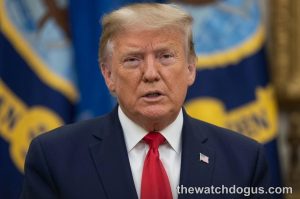
During a public appearance, Donald Trump made an unusual self-deprecating remark that suggested a brief acknowledgment of exclusion from circles of power.
Trump referred to himself as being at the “bottom of the totem pole” and added that if he ended a war, “maybe they’ll let me in.” The audience reaction was noticeably different from typical responses to his remarks, with laughter that came hesitantly and carried undertones of uncertainty.
What Was Said
Trump’s comment appeared to reference his desire for acceptance from unnamed gatekeepers. The remark framed ending a conflict as a potential path to gaining approval or legitimacy rather than as a moral or strategic objective.
The joke deviated from Trump’s typical messaging patterns, which emphasize strength and inevitability. Instead, it briefly introduced language suggesting hierarchical positioning and the need for external validation.
The Reaction
The audience’s response differed markedly from their usual reactions to Trump’s remarks. The laughter sounded thin and relieved rather than confident, suggesting people were uncertain whether the statement warranted amusement or deeper consideration.
Attendees appeared to use humor as a mechanism to move past an uncomfortable moment rather than to genuinely engage with the comment’s implications. The collective response seemed designed to restore the familiar dynamic of Trump as dominant figure.
What It Revealed
The moment exposed a tension within Trump’s political identity: positioning himself as an outsider while simultaneously seeking recognition from established institutions. He has historically dismissed elite approval while frequently referencing awards, rankings, and validation as measures of success.
The comment introduced concepts of vulnerability and status anxiety into his public messaging. It suggested awareness of being measured and ranked by forces beyond his complete control, departing from his standard persona of absolute certainty.
Trump did not dwell on the remark, instead shifting topics and reasserting control through momentum. His quick pivot prevented extended focus on the statement’s underlying implications about power dynamics and acceptance.
Why It Matters
Political analysts observe that such unguarded moments often reveal underlying concerns beneath public performances. In this instance, the language of access and conditional acceptance contradicted the typical framing of self-generated power.
The distinction between Trump joking outward at opponents versus inward at his own positioning created observable differences in audience reception. This shift reflected how listeners process statements based on their directional focus and implications.
This story has been updated. CNN’s Digital team contributed to this report.