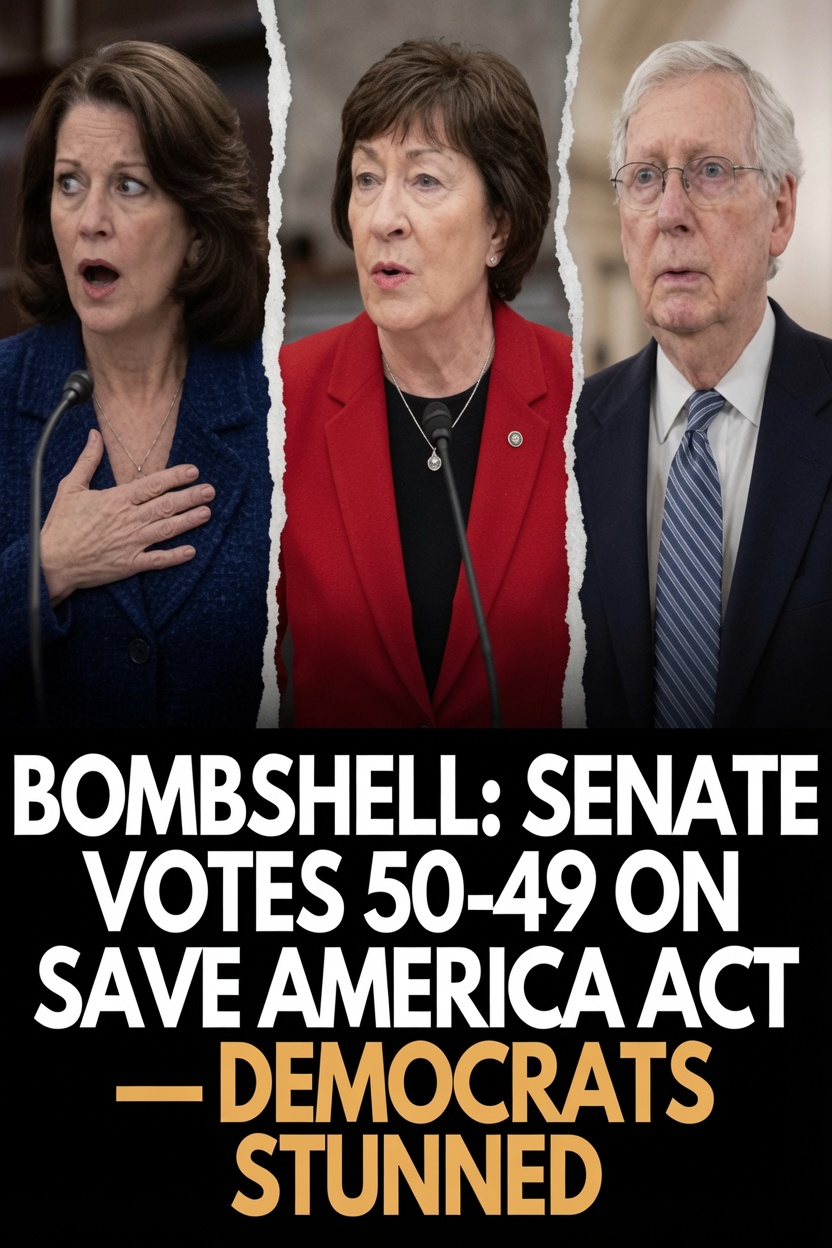
During a Senate budget vote on June 4, Republicans secured 50 votes for the House-passed SAVE America Act, demonstrating majority support but falling short of the 60-vote supermajority required under chamber rules.

The legislation, which would require proof of citizenship for voter registration in federal elections, became the focus of an extended voting session known as “vote-a-rama.” Sen. Mike Lee of Utah introduced the amendment as part of the Senate’s budget reconciliation process, triggering multiple procedural votes on related measures.
The Vote and Republican Unity
The amendment passed with exactly 50 votes, with Republican Sen. Susan Collins of Maine switching her position to support the measure after opposing a similar proposal from Sen. Lindsey Graham of South Carolina earlier in the session. The earlier Graham amendment had failed 48-50 when four Republicans, including Collins, joined Democrats in opposition.
Vice President JD Vance, who serves as president of the Senate, stood ready to cast a tie-breaking vote if needed. This gave supporters effectively 51 votes in favor, demonstrating the coalition could secure a simple majority but remained 10 votes short of the required supermajority threshold.
Legislative Obstacles and Arguments
Senate rules required 60 votes for the amendment to be adopted as a waiver to budget rules within the reconciliation process. Senate Majority Leader John Thune noted that Democrats remained unified in opposition to the measure, making the supermajority threshold an insurmountable procedural barrier.
Supporters of the legislation, including Republican leaders, argue that requiring documentary proof of citizenship would enhance election security and increase public confidence in voting outcomes. Opponents contend that existing safeguards already prevent non-citizens from voting and that additional documentation requirements could create obstacles for eligible voters.
What Comes Next
The underlying $70 billion immigration enforcement and border security legislation is expected to advance without the SAVE Act provisions. The failed amendment vote underscored tensions within the Senate over the filibuster rules, which Democrats have used to maintain leverage on election-related proposals.
For now, the SAVE America Act remains blocked by procedural requirements despite receiving support from a chamber majority.
This story has been updated. CNN’s reporting contributed to this article.