Powerful Earthquake Rocks Central Colombia, Causing Building Collapse and Casualties in Bogotá
BOGOTÁ, Colombia — A powerful earthquake struck central Colombia on Tuesday morning, causing widespread damage across several cities and triggering emergency rescue operations in the nation’s capital. Authorities have confirmed multiple fatalities and dozens of injuries following the magnitude 6.3 tremor, which led to the partial collapse of a residential building in downtown Bogotá and left many residents feared trapped beneath the rubble.
According to Colombia’s geological monitoring agencies, the earthquake measured 6.3 on the Richter scale and originated near the city of Villavicencio, located approximately 80 kilometers (50 miles) southeast of Bogotá. The quake struck at around 10:47 a.m. local time and lasted for nearly 45 seconds, sending strong shockwaves through central regions of the country.
The tremor was felt across a wide area, including major cities such as Medellín and Cali, prompting thousands of residents to evacuate homes, offices, schools, and commercial buildings as the ground shook beneath them.
Apartment Building Suffers Catastrophic Structural Failure
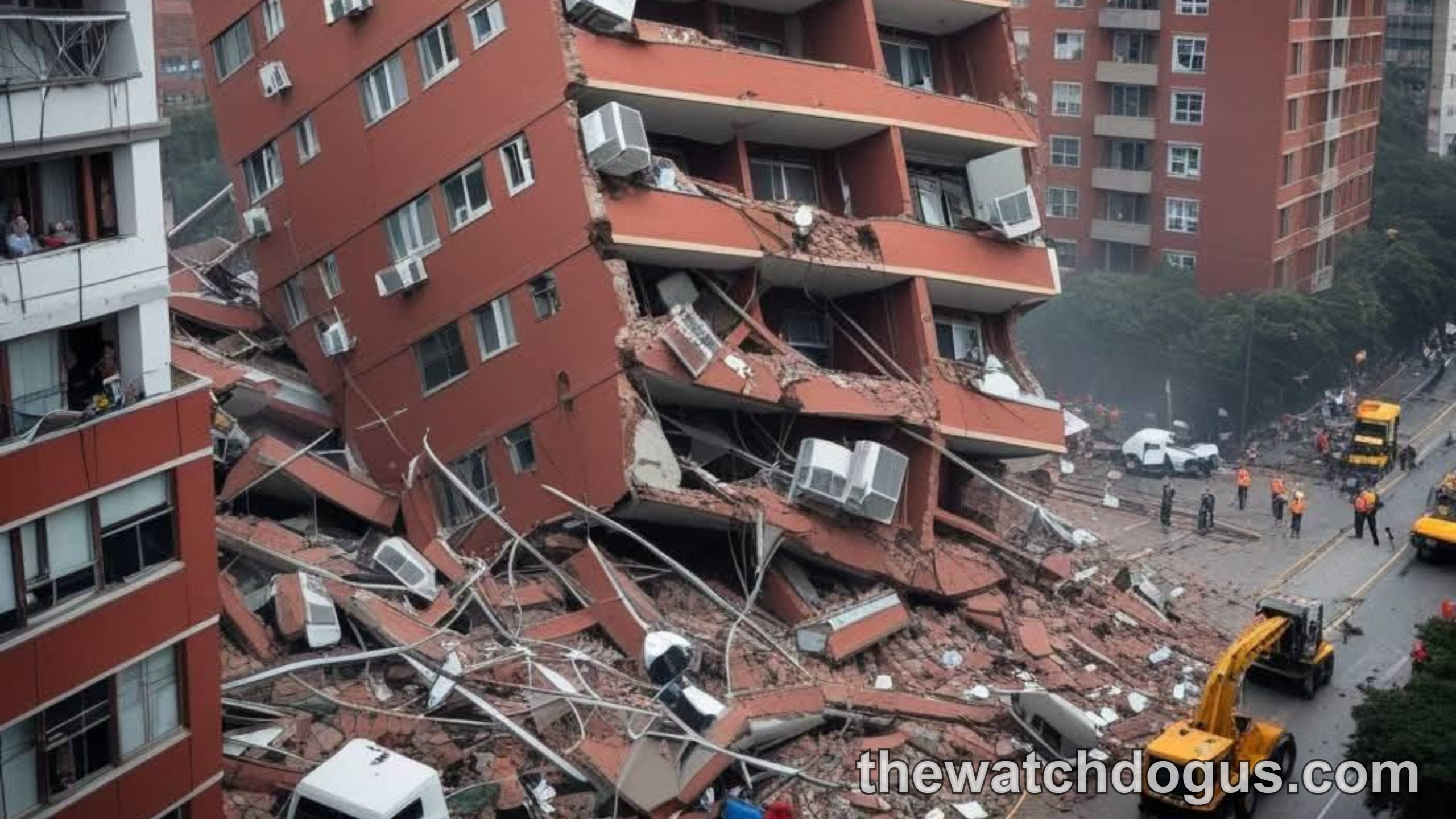
The most dramatic and devastating scene unfolded in downtown Bogotá, where a multi-story red-brick apartment building suffered a severe structural collapse. Eyewitnesses reported hearing loud cracking sounds before portions of the structure gave way, causing sections of the building to tilt and partially collapse onto a neighboring property.
Photographs and video footage from the disaster zone show extensive destruction. Large sections of exterior walls have crumbled, balconies have collapsed, and debris is scattered across surrounding streets. Several air-conditioning units can be seen dangling from fractured concrete walls, while exposed steel reinforcement bars appear twisted and snapped, highlighting the intensity of the structural failure.
Emergency officials have cordoned off the area amid fears that additional portions of the building could collapse. Engineers and disaster assessment teams are currently evaluating the stability of nearby structures to determine whether neighboring buildings are safe for residents to re-enter.
Rescue Operations Continue Amid Uncertainty
Search-and-rescue operations began almost immediately after the earthquake struck. Firefighters, emergency medical personnel, police officers, and specialized urban rescue teams rushed to the scene equipped with heavy machinery, thermal imaging equipment, rescue dogs, and medical supplies.
Authorities said rescuers are working around the clock to locate survivors who may still be trapped beneath the debris. Teams have been carefully removing rubble while listening for signs of life from within the collapsed sections of the building.
Witnesses described scenes of panic as residents attempted to flee during the earthquake. Some reported seeing clouds of dust engulfing the street as parts of the structure gave way. Others said they heard cries for help from individuals trapped inside apartments immediately after the collapse.
Emergency vehicles lined nearby streets as rescue crews coordinated efforts amid difficult conditions. Dust from the collapse continued to hamper visibility during the initial stages of the response, while concerns about aftershocks complicated rescue operations.
Casualties and Injuries Reported
Government officials have confirmed that the earthquake has resulted in multiple deaths, although the exact number remains unclear as rescue operations continue. Dozens of people have also been injured, with many transported to hospitals across Bogotá for treatment.
Medical centers throughout the city have activated emergency protocols to handle the influx of patients. Healthcare workers have been placed on heightened alert as authorities continue to assess the full scale of the disaster.
Officials warned that casualty figures may rise as rescue teams gain access to heavily damaged areas and continue searching through collapsed sections of buildings.
Family members gathered near emergency perimeters throughout the day, anxiously awaiting news about loved ones believed to be inside affected structures. Temporary assistance centers have been established to provide information, shelter, and support to displaced residents.
Widespread Impact Across Central Colombia
Although Bogotá experienced some of the most visible damage, the earthquake affected communities throughout central Colombia. Reports of cracked buildings, fallen debris, power outages, and damaged infrastructure emerged from multiple municipalities following the tremor.
In Villavicencio, near the earthquake’s epicenter, authorities conducted rapid inspections of public buildings, schools, and transportation infrastructure. Preliminary assessments indicated varying degrees of structural damage in several neighborhoods.
Transportation services in parts of the affected region were temporarily suspended while engineers examined bridges, roadways, and transit systems for potential damage. Some areas also reported interruptions to electricity and telecommunications services immediately after the quake.
Residents across central Colombia described the earthquake as one of the strongest they had experienced in recent years. Many said the shaking was intense enough to move furniture, crack walls, and trigger building alarms.
Government Response and Emergency Measures
National and local authorities have activated emergency response plans to coordinate rescue and recovery efforts. Government agencies are working alongside firefighters, military personnel, civil defense teams, and humanitarian organizations to assist affected communities.
Officials urged residents to remain vigilant and follow guidance from emergency services, particularly in areas where buildings may have sustained structural damage. Citizens have been advised to avoid entering compromised structures until professional inspections have been completed.
Emergency shelters have been prepared for residents displaced by the earthquake, while disaster management agencies continue conducting damage assessments throughout the region.
Authorities are also monitoring the possibility of aftershocks, which commonly occur following significant seismic events. Experts warned that additional tremors could further weaken damaged buildings and create new hazards for rescue personnel and residents.
Colombia’s Seismic Vulnerability
Colombia is located within a geologically active region where several tectonic plates interact, making earthquakes a recurring natural hazard. While building regulations have improved over recent decades, older structures in some urban areas remain vulnerable to strong seismic activity.
Seismologists noted that earthquakes of this magnitude can cause significant damage, particularly when they occur near densely populated areas. The impact often depends on factors such as building construction standards, depth of the quake, soil conditions, and proximity to the epicenter.
The latest earthquake serves as a stark reminder of the challenges posed by seismic activity in the region and the importance of preparedness, resilient infrastructure, and rapid emergency response capabilities.
Search for Survivors Remains the Top Priority
As night approached, rescue crews continued their efforts under floodlights and emergency generators, determined to locate anyone still trapped beneath collapsed structures. Heavy equipment operators worked alongside specialized rescue teams in a carefully coordinated operation designed to maximize the chances of finding survivors.
Authorities emphasized that the situation remains fluid and that official casualty and damage figures may change as assessments continue. For now, the focus remains firmly on saving lives, supporting affected families, and ensuring the safety of residents throughout the impacted region.
The full extent of the earthquake’s destruction may not be known for days, but the scenes emerging from Bogotá and surrounding communities have already underscored the devastating power of the natural disaster and the resilience of emergency responders working tirelessly in its aftermath.
Note: If this is intended as a real news report, the details should be independently verified. The text above is a rewritten article based solely on the information provided in your caption.