None of the People Crying About President Trump Banning Media Outlets From the White House Made a Peep When the President Was Banned From Twitter.
A growing debate over media access to the White House has renewed questions about press freedom, executive authority and the standards that should govern access to presidential briefings.
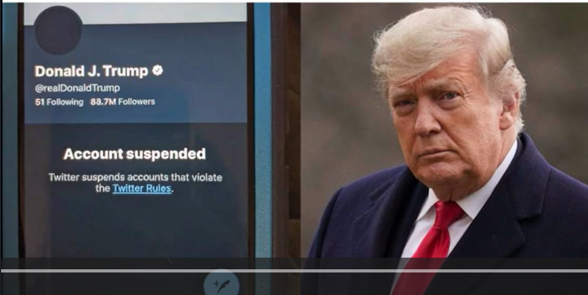
Critics of restrictions placed on certain news organizations argue that the recent controversy reflects what they see as a double standard in discussions about free speech and media access. They point to the decision by major social-media platforms to suspend then-President Donald Trump from their services following the events of January 6, 2021, arguing that the episode demonstrated how powerful private companies can influence the public conversation by limiting access to political figures.
Supporters of greater White House control over briefing-room access, meanwhile, argue that the executive branch has an interest in determining which organizations participate in official media events. From this perspective, access to a White House briefing is not necessarily an unrestricted entitlement, particularly when officials believe a news organization has repeatedly published inaccurate or misleading information.
The disagreement highlights a broader question about the relationship between government officials, private technology companies and the news media. Social-media platforms are private businesses and establish their own rules regarding content and user access. The White House, by contrast, operates as a public institution and must balance presidential communications with principles governing press access and the public’s ability to receive information.
The distinction has become particularly important as political leaders increasingly rely on both traditional news organizations and social-media platforms to communicate directly with the public. Supporters of tighter media-access policies say presidents should not be compelled to provide privileged access to organizations they believe are acting primarily as political advocates rather than journalists.
Critics counter that government control over access to journalists raises different concerns because the White House is a public institution. They argue that press access should not depend solely on whether coverage is favorable to the administration. In their view, a free press must be able to question, challenge and scrutinize elected officials without fear that unfavorable reporting could result in exclusion.
The debate also raises an important distinction between freedom of speech and access to government officials. The First Amendment generally protects individuals and organizations from government restrictions on speech, but it does not automatically guarantee every private company or journalist unrestricted access to every government forum. At the same time, government decisions affecting journalists can raise constitutional and institutional concerns depending on the circumstances.
The earlier suspension of Trump’s social-media accounts remains part of this larger discussion. Those companies said their actions were based on concerns surrounding the January 6 attack and the potential for further violence, while Trump’s supporters argued that the decisions amounted to political censorship. The episode continues to be cited by different sides of the media-access debate.
At the center of the current controversy is therefore a larger question: How should democratic institutions balance press freedom, editorial responsibility, government authority and equal access to public information?
Supporters of White House restrictions argue that accountability should apply to media organizations as well as political officials. Critics respond that accountability should not become a mechanism for excluding unfavorable journalism.